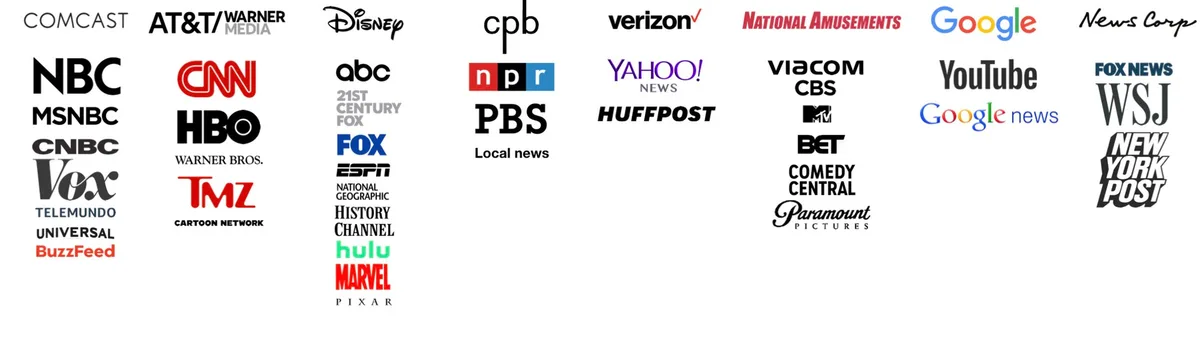
Who owns the news media is rarely a question with a one-line answer. The masthead you read is usually a brand sitting on top of a chain: a publication, then a parent company, then sometimes a holding company or investment fund several steps removed. The most important qualification is that ownership is not a single fact but a structure, and the structure varies enormously between a family-owned local paper, a wire service, and a podcast network folded into a larger media group.
That structure matters because ownership shapes incentives. It determines who signs off on budgets, whether a newsroom is treated as a public service or a profit center, and what happens when revenue falls. It rarely dictates individual stories, but it sets the conditions under which stories get assigned, killed, or never pitched at all. Readers who understand the chain can weigh the news with more information than the byline alone provides.
This explainer walks through how those layers work in practice, what ownership actually changes in a newsroom, and how to trace it for any outlet you read. The economics of media ownership are covered in more depth in our economics section, and day-to-day developments in our media news coverage.
Why isn't the masthead the owner?
A masthead is the public identity of a publication: its name, its editors, its stated mission. It is a brand, and brands can be bought, sold, and licensed without the audience ever being told in detail. The legal owner is whatever entity appears on the incorporation and acquisition paperwork, which may be a media company, a private holding structure, or an investment vehicle.
There are sound business reasons for this layering. Holding companies isolate liability, pool shared services like ad sales and printing, and make acquisitions easier to finance. But the same layering makes ownership harder for readers to see. A publication can change hands twice in five years while its logo, its editors, and its tone stay the same, which is exactly why the visible brand is an unreliable guide to the invisible owner.
What does ownership actually change in a newsroom?
Ownership rarely writes headlines. What it controls is the envelope within which journalism happens: headcount, budget, investment in coverage areas, and the appetite for litigation risk when a powerful subject threatens to sue. A newsroom with a well-capitalized owner can defend a contested story; a newsroom that has been cut repeatedly may settle suits it would once have fought, because fighting is expensive. How those suits actually play out is its own subject, which we covered in how libel suits against news outlets actually get resolved.
Ownership also shapes what happens when money gets tight. Consolidated owners can spread the pain across titles, or they can concentrate it, closing weaker outlets and consolidating coverage into shared regional or national desks. Neither approach is automatically better for readers, but they produce different news: one local outlet with thin staffing, or several outlets sharing the same rewritten stories. The pattern in recent years has run toward the quieter version, which we documented in newsroom layoffs changing character: fewer collapses, more quiet attrition. We covered a connected angle in Newsroom layoffs changed character: fewer collapses, more quiet attrition.
What does consolidation look like from the inside?
Small independent media projects often end up inside larger companies, and the arc of one well-known example is instructive. Longform, the article-recommendation service and podcast founded in Brooklyn in 2010 by journalists Max Linsky and Aaron Lammer, joined the Vox Media Podcast Network in 2021, according to Longform.org's Wikipedia entry. The recommendation service had already shut down in January 2022, and the podcast itself published its final episode in June 2024, when The New York Times, as cited there, described it as having become "required listening for aspiring and early-career writers."
The point is not that anything bad happened. It is that a beloved independent media property passed through a corporate network and then ended, and most readers learned the details only in retrospect. Multiply that dynamic across thousands of outlets, newsletters, and podcasts, and you get the current information environment: a long tail of titles whose ownership and survival are in constant, mostly invisible motion. Even the archive matters here. Longform's curated list of standout journalism remains online at Longform's best-articles page, a reminder that the content often outlives the company that gathered it.
How can you trace who owns a news outlet?
You do not need a corporate-intelligence subscription to do the basics. A short routine covers most cases:
- Check the outlet's own pages. Look for an "About," "Ownership," or "Corporate" section, and the copyright line in the footer, which usually names the legal entity.
- Read the parent company's disclosures. If the parent is publicly traded, it files regular reports that list its media assets. If it is private, look for its own press releases on acquisitions.
- Follow the acquisition trail. Trade press and media-business reporters cover ownership changes; searching the outlet's name plus "acquired" or "parent company" usually surfaces the chain.
- Note the shared services. If several titles in your state share a newsroom address, a publisher, or identical stories, they likely share an owner even when their names differ.
What this means in practice: the first three steps take minutes and settle most questions. The fourth catches the cases the paperwork obscures, where consolidation shows up in the copy itself before it shows up in any filing.
Does ownership bias the news?
The honest answer is: sometimes, indirectly, and usually through structure rather than instruction. Documented cases of owners dictating specific coverage exist, and they are serious when they happen. But the more common mechanism is quieter. Owners decide what coverage areas get staffed, what beats get cut, and how aggressively the outlet pursues stories that threaten the owner's commercial or political interests. That is influence without a memo.
The strongest counterargument deserves its due: readers sometimes over-read ownership. A publication owned by a wealthy individual or a fund is not thereby disqualified; every outlet has an owner, and independence is a matter of degree for all of them. The useful test is not who owns the outlet but whether its journalism holds up when the owner's interests are implicated. That is a test you can apply story by story, and it is more informative than any org chart.
What readers should take away
The evidence supports a modest conclusion. Ownership of the news media is layered, frequently changing, and more consequential for newsroom capacity than for individual headlines. Tracing it is a learnable habit: check the entity, check the parent, and pay attention to signs of shared ownership across titles. What remains unknown in any specific case is how much the ownership actually shaped a given story, and that question can only be answered by reading critically, not by consulting a chart. The goal is not cynicism. It is knowing who is paying for the words, so you can judge the words on their merits.